

Digital evidence isn’t just another file.
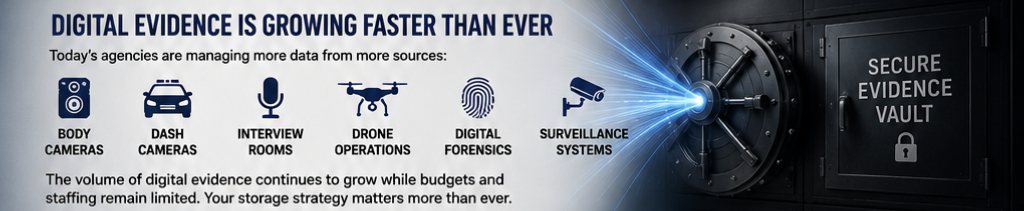
For law enforcement agencies, digital evidence may represent the most important information collected during an investigation. Body camera footage, dash camera recordings, interview room video, surveillance footage, drone operations, digital forensic extractions, and investigative records often become critical pieces of evidence that must remain accessible, protected, and verifiable for years.
When evidence cannot be located, becomes corrupted, is inaccessible during an investigation, or fails to meet retention requirements, the consequences can extend far beyond technology. Investigations may be delayed, resources may be wasted, and public trust may be impacted.
That’s why evidence storage requires a different approach than traditional business data storage. It demands a strategy built around security, accessibility, integrity, retention, and long-term growth.
Many agencies are discovering that the systems implemented five or ten years ago were never designed for today’s evidence volumes.
Body cameras record at higher resolutions. Surveillance systems capture more video than ever before. Drone programs continue to expand. Public records requests have increased. Retention requirements continue to grow.
• How much storage capacity will we need three years from now?
• Can our current infrastructure support future evidence growth?
• What happens if a storage system fails?
• How quickly can investigators access evidence when they need it?
• Are we adequately protected against ransomware or cyber threats?
• How can we manage long-term retention costs without sacrificing accessibility?
The right strategy isn’t simply about adding more storage. It’s about building an evidence environment that can support the mission for years to come.